Alert! Are you protected against data breaches and malicious activities?
What is a firewall?
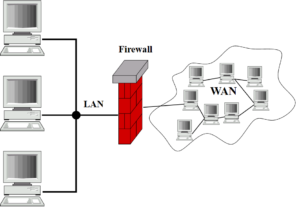
A firewall is a security device or software application that acts as a barrier between a trusted internal network and an untrusted external network, typically the Internet. Its primary purpose is to control and monitor incoming and outgoing network traffic based on predetermined security rules.
Firewalls are designed to protect networks and systems from unauthorized access, malicious activities, and potential threats. They analyze network traffic by examining data packets and enforcing predetermined security policies to determine whether to allow or block the traffic.
Firewalls can be implemented in various forms, including hardware appliances, software applications, or a combination of both. They use a variety of techniques such as packet filtering, stateful inspection, application-level gateways, and virtual private networks (VPNs) to enforce security policies.
Packet filtering firewalls examine the header information of each network packet, such as source and destination IP addresses, ports, and protocols, to determine if the packet should be allowed or blocked based on predetermined rules.
Stateful inspection firewalls go beyond packet filtering and also keep track of the state of network connections. They maintain information about established connections and use this context to make more informed decisions about which packets to allow.
Application-level gateways, also known as proxy firewalls, operate at the application layer of the network protocol stack. They act as intermediaries between client devices and external servers, inspecting and filtering network traffic at the application level. This enables more granular control and additional security features but may introduce some performance overhead.
Firewalls can also provide virtual private network (VPN) capabilities, allowing remote users to securely access a private network over the Internet by encrypting their traffic and authenticating their identity.
Overall, firewalls play a crucial role in network security by protecting against unauthorized access, preventing network attacks, and minimizing the risk of data breaches and malicious activities.
Who needs a firewall?
Firewalls are essential for any organization or individual that connects to the Internet or has a network infrastructure. Here are some examples of who needs a firewall:
- Businesses: Small, medium, and large enterprises require firewalls to safeguard their network infrastructure, protect sensitive data, and prevent unauthorized access to their systems. Firewalls are particularly crucial for organizations that handle customer data, financial information, or other confidential data.
- Home Users: Even individual users who connect their personal computers, laptops, or mobile devices to the Internet can benefit from having a firewall. It helps protect their devices from malicious activities, such as hacking attempts, malware, and unauthorized access.
- Educational Institutions: Schools, colleges, and universities often have networks with numerous devices, including computers, servers, and student devices. Firewalls are necessary to protect the network resources, prevent unauthorized access, and ensure a safe learning environment.
- Government Organizations: Government agencies and departments, at various levels, deal with sensitive information and critical infrastructure. Firewalls are essential to protect government networks from cyber threats, unauthorized access, and potential attacks.
- Healthcare Organizations: Hospitals, clinics, and healthcare providers handle sensitive patient data and must comply with strict privacy regulations like HIPAA (Health Insurance Portability and Accountability Act). Firewalls help secure their networks, protect patient records, and prevent data breaches.
- Financial Institutions: Banks, financial firms, and other financial institutions process vast amounts of sensitive financial data. Firewalls are crucial for securing their networks, protecting customer information, and preventing unauthorized access or fraudulent activities.
- E-commerce Platforms: Online retailers, e-commerce platforms, and payment gateways handle customer transactions and sensitive financial information. Firewalls are necessary to protect customer data, secure online transactions, and prevent security breaches that could compromise customer trust.
- Remote Workers: With the rise of remote work, individuals and organizations rely heavily on virtual private networks (VPNs) to establish secure connections between remote workers and their corporate networks. Firewalls are often an integral part of VPN solutions to ensure secure access to network resources.
In summary, firewalls are important for any individual, business, or organization that wants to protect their network infrastructure, data, and systems from unauthorized access, cyber threats, and potential attacks.
https://itrinity.co.za/security/