
Computers have evolved significantly over time. Early computers were bulky and difficult to operate, but over time they have become increasingly more powerful and user-friendly. Advances in technology have allowed for the development of smaller and more powerful computers, with faster processors, more memory, and better graphics. The introduction of the internet has also had a huge impact on the development of computers, allowing for increased communication and the ability to access information from anywhere in the world. The use of artificial intelligence has also allowed for the development of more intelligent and powerful computers.
The first computers were massive and complex machines that were used primarily for scientific and military purposes. The first computers were created in the 1940s and were known as the ENIAC (Electronic Numerical Integrator and Computer), which was developed by the U.S. Army for calculating artillery firing tables. The ENIAC weighed over 30 tons and contained 18,000 vacuum tubes, 70,000 resistors, and more than 5 million hand-soldered joints. It was able to perform up to 5,000 calculations per second and was the first computer to use binary arithmetic, making it the first fully programmable computer.
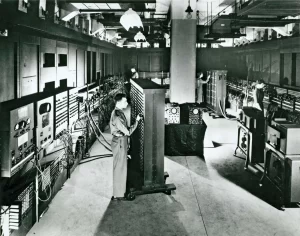
ENIAC 1946
Second-generation computers, which developed during the 1950s and 1960s, used transistors instead of vacuum tubes. This made them smaller, faster, and more reliable. These computers also used magnetic core memory, which greatly increased the amount of memory available. Computers of this generation were used for a variety of purposes, including scientific, commercial, and military applications. This generation of computers also saw the development of high-level programming languages, such as FORTRAN and COBOL, which allowed for easier programming.
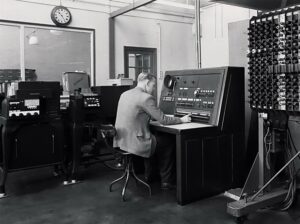
1950s
Third-generation computers, which developed during the 1960s and 1970s, used integrated circuits instead of transistors. This allowed for even smaller and faster computers, with even more memory. This generation of computers introduced the use of operating systems, which allowed for the development of user-friendly interfaces. Computers of this era were also used for the development of the internet and for the development of the first video games.
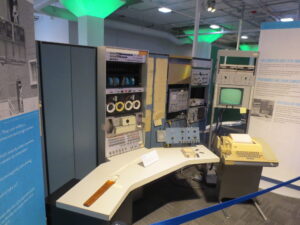
1960s Computer Terminal
Fourth-generation computers, which developed during the 1980s and 1990s, used microprocessors instead of integrated circuits. This allowed for even smaller and faster computers, with even more memory and greater capabilities. The development of personal computers and the internet revolutionized this generation of computers, allowing for the development of personal computing and the widespread use of the internet. Computers of this era were also used for the development of the first graphical user interfaces and for the development of modern computer games.
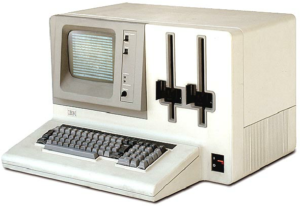
IBM 5110 model 3, introduced in 1980
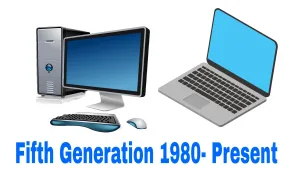
Fifth-generation computers, which are currently being developed, use artificial intelligence and advanced algorithms to allow for more efficient and powerful computers. These computers are able to process large amounts of data quickly and accurately, and are used for a variety of applications such as data analysis, medical diagnosis, and autonomous driving. These computers are also able to learn and adapt to their environment, making them more efficient and intelligent.
These computers are extremely powerful and user-friendly. They are typically powered by multi-core processors and have large amounts of memory and storage. They use a variety of operating systems, such as Windows, macOS, and Linux, and have access to a wide range of software applications. Current computers are used for a variety of purposes, such as business, education, entertainment, and communication. They are also becoming increasingly more mobile, with the development of laptops, tablets, and smartphones.
Sixth-generation computers are expected to be even more powerful and intelligent than fifth-generation computers. These computers will use quantum computing, which will allow for even faster processing speeds and more efficient data storage and retrieval. These computers will also be able to use artificial intelligence and machine learning algorithms to create more intelligent and autonomous systems. They are expected to be used for a variety of applications, such as medical diagnosis, autonomous vehicles, and financial forecasting.
How will computers in year 2030 operate and what will they look like?
Computers in 2030 are expected to be even more powerful and user-friendly than current computers. They will be powered by quantum processors and will have access to massive amounts of data, allowing for more accurate and efficient data analysis. They will also use artificial intelligence and machine learning algorithms to analyze data and create more efficient and autonomous systems.
In terms of design, computers in 2030 are expected to be incredibly small and lightweight. This will allow them to be carried around more easily and will enable them to be used in a variety of settings. They will also be able to connect to other devices, such as smartphones and tablets, and will be able to use a variety of operating systems and software.
In terms of usage, computers in 2030 are expected to be used for a variety of applications, including medical diagnosis, autonomous vehicles, financial forecasting, and virtual reality. They will also be used for entertainment and communication purposes, allowing people to stay connected across the world.